Most anglers only think about rod protection after something goes wrong. It rarely happens while fishing. It happens in the moments between fishing.
Rod damage is usually simple and avoidable. A door shuts on a tip section. A rod shifts in the back of the car. Gear gets stacked without thinking. That is often all it takes.
And once a rod is gone, it is rarely worth repairing and replacement costs add up quickly, especially if you fish regularly.
Protecting your rod is not only about being careful. It is about removing the risk completely.
How rods actually get damaged
Fishing rods are not fragile in use. They are fragile in transport.
A proper rod tube also helps when you are storing gear long term. Even if rods are just leaning in a corner or kept in a garage, small knocks and pressure points can slowly weaken a blank over time. A simple tube removes that risk completely.
Most damage comes from
Rods being left loose in cars or boots
Pressure from other gear stacked on top
Tips catching in doors
Small knocks that create hidden weak points
Ultralight and LRF rods make protection even more important. They are built for sensitivity, not impact resistance. A light blank that performs brilliantly on the water can still fail easily off it.
The problem is not fishing. It is everything around fishing.
Why a rod protector is worth having
A rod protector does one simple thing. It removes direct contact between your rod and everything else.
That alone prevents most of the common damage that happens during transport.
It is not an upgrade. It is basic protection for expensive kit that is worth keeping safe.
A simple DIY fishing rod protector
You do not need to spend much to solve the problem.
A length of PVC pipe and some cord is enough to build a solid rod tube that protects your gear properly during transport.
It is cheap, simple, and does the same job as purpose-built cases in most real-world situations.
Items you will need
Cord (I’m using green paracord)
PVC pipe that snugly fits your rod
How to build
Cut your PVC pipe so it’s a couple of inches longer than your rod.
Drill two holes at each end of the pipe (4 holes total).
Thread a long length of cord through the bottom two holes and tie a knot — this stops the rod slipping out of the bottom.
Run the cord up the pipe and, about 8 inches from the top, wrap it around the PVC pipe and secure it with a knot.
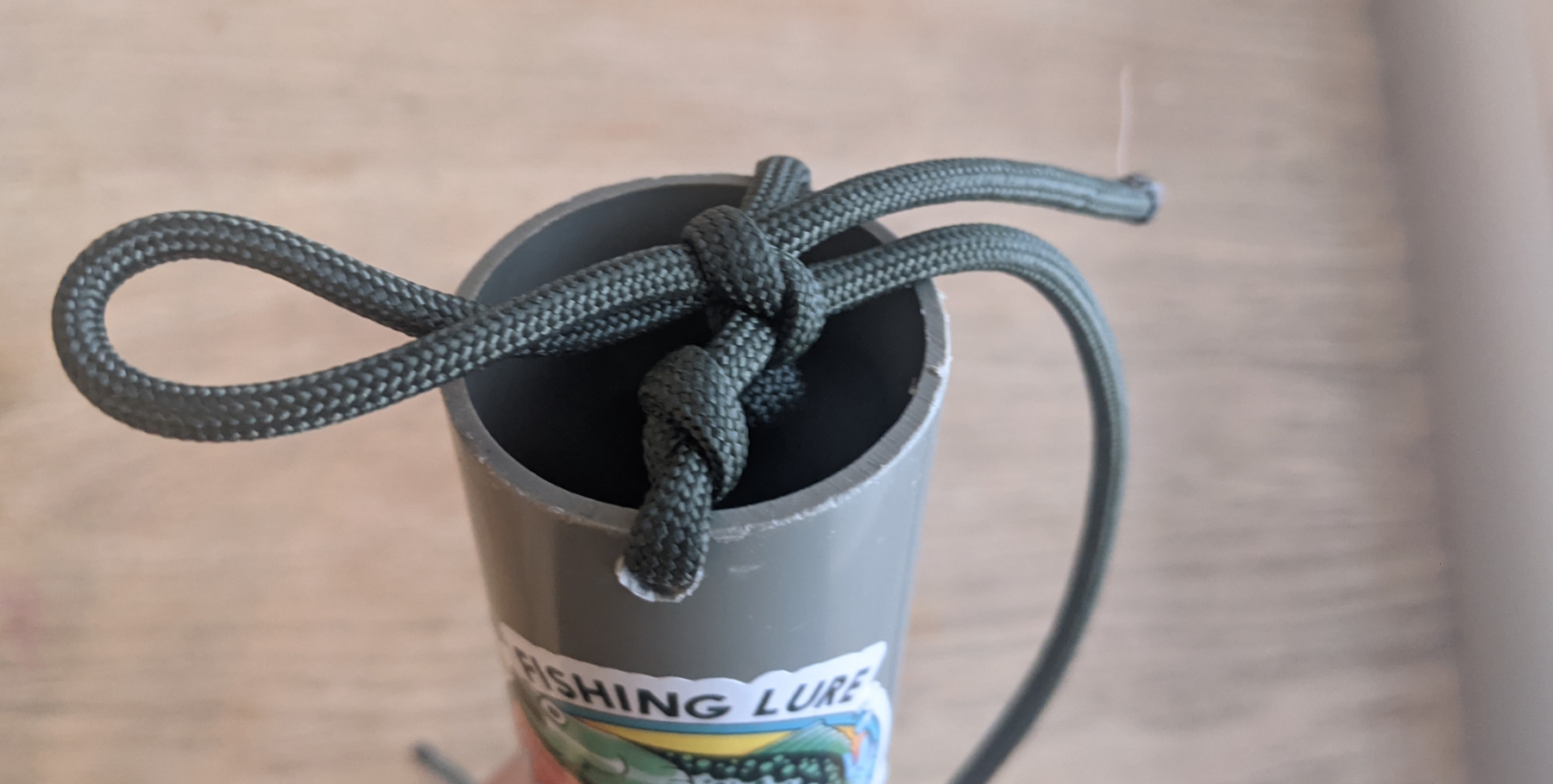
At the top (open end), thread a shorter piece of cord through one hole — this will act as your closure.
Insert your rod into the protective case.
To secure it, thread the loose end of the cord through the unused hole and tie it as you would a shoelace. This keeps the rod safely in place during transport.
Done — simple, cheap, and effective.
Final thoughts
Rod protection is one of those things that does not feel important until you lose a rod. I learned that the hard way after my favourite rod met its end in a car door.
Most damage does not happen on the bank or the water. It happens in cars, boots, hallways, and storage spaces where rods are handled without much thought.
A simple tube like this removes that risk almost completely.
It is not fancy. It is not gear for the sake of gear.
It is just a cheap way to stop avoidable damage and keep your rods fishing for longer.