Dropshot Rig Fishing Guide (Setup, How to Fish It, How to Tie & When to Use It)
What the dropshot rig actually is
The dropshot rig is a finesse fishing setup where a weight sits on the bottom and a hook sits above it on the same line, creating a way to hold a lure in a fixed position in the water column rather than dragging it or retrieving it through the water.
In practice, dropshot rig fishing changes the way you think about lure fishing entirely. Instead of covering water and trying to find active fish, you’re holding a lure still in places where you already believe fish are sitting. It’s a rig that slows everything down and turns fishing into a waiting game rather than a searching one.
Most of the time I reach for a dropshot rig when I already know fish are there. You might have seen them, felt the taps, or just know the area should be holding fish. That’s where this rig starts to make sense, because it doesn’t ask fish to chase anything. It just puts the lure right in front of them, presenting it with subtle, precise, natural movements.
Why the dropshot rig works
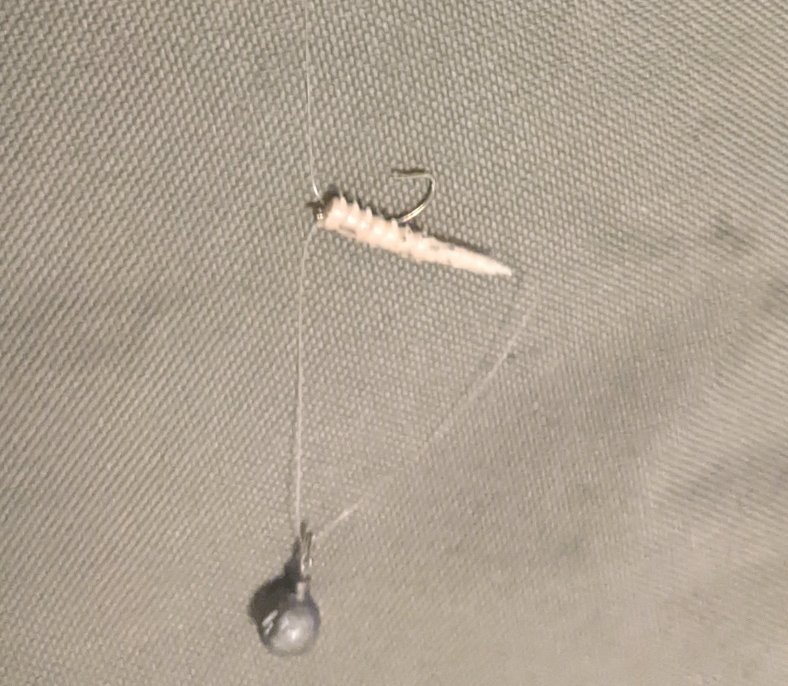
An example of a dropshot weight
The dropshot rig works because it removes almost everything fish don’t want when conditions are tough, speed, pressure, and unnecessary movement. Instead of forcing reactions, it creates a situation where the lure is fixed in the right spot long enough that fish eventually make a decision.
That decision usually doesn’t come during movement. It comes in the stillness between movements, when everything has settled and the lure is just hanging there, slightly lifted off the bottom, barely doing anything at all. That moment of inactivity is often when the bite happens.
It’s a different mindset to most rigs. You’re not trying to provoke a chase you’re trying to outlast hesitation.
Where a dropshot rig works best
A dropshot rig really comes into its own in areas where fish aren’t roaming but holding. Places like rock edges, vertical walls, bridge legs, marina structures, and deeper drop-offs suit it perfectly because fish will sit in those areas and wait for food to come past rather than actively hunt.
It also becomes far more effective in clear or heavily pressured water. When fish have seen every moving lure and faster presentation going, they start ignoring anything that looks like effort. Slowing things right down with a dropshot rig can act like a reset button.
If fish are actively chasing, this is not the rig you want. But when everything feels tight, slow, and unresponsive, it often becomes the difference between a blank and a session that slowly turns around.
When to use a dropshot rig
I usually don’t start a session with a dropshot rig. It tends to come in once I’ve already worked out what the water is doing and realised fish are present but not really switching on.
It’s at its best when you’re getting signs of life without commitment , taps that don’t convert, follows that stop short, or fish that show themselves and then disappear. It also works well when conditions are clear, bright, or pressured enough that fish are holding tighter to structure and becoming more selective.
It’s not a rig for covering water. It’s a rig for continuously working a single productive spot.
How to fish a dropshot rig
Fishing a dropshot rig is more about restraint than action. Once it’s in the water, the first job is simply to let it settle. Tighten into the weight so you can feel contact with the bottom, then start working it in a way that feels subtle.
Small lifts of the rod tip, slight tension changes, and long pauses are really all it needs. There’s no real rhythm you’re forcing on it, more like occasional interruptions in an otherwise still presentation.
The key part is accepting how little input is actually needed. Sometimes it can feel like nothing is going on for long stretches, but that’s exactly when it’s doing its job. The bite often comes after you stop trying to work the lure and just leave it sitting there.
I often find simply by trying to hold the rod still gives enough subtle vibration and rod tip movement to bring the lure to life whilst using this rig.
Dropshot Rig Setup
At its simplest, the dropshot rig setup is just a hook, a length of tag line, and a weight. The hook is tied directly onto the mainline so that the hook is at a 90° angle rather than tight against the line.
That angle matters because it allows the lure to move naturally even when the rig is still.
Below the hook, you leave a length of line and attach a Dropshot weight, this section of linked below your hook becomes your drop.
A short drop keeps everything tight to the bottom, while a longer one lifts the lure higher into the water column where fish might be holding.
The dropshot weight lets you fine-tune exactly where your lure sits. You can adjust depth just by sliding the weight up or down the line as needed.
Being able to change depth on the fly matters when you’re working different features and trying to find where fish are holding as it allows you to be able to quickly adjust depth and experiment.
The overall structure is simple enough that once you’ve tied it a few times, it stops feeling like a complicated method.
How To Tie A Dropshot Rig
Step 1. Thread your hook onto the mainline, make sure your hook is facing upwards towards your rod.
Step 2. Create a simple loop in your mainline.
Step 3. Pass your hook through your loop four times.
Step 4. Pull both ends to tighten down the knot and thread on your dropshot weight on the tag end.
Hook height and adjustment
One of the subtle advantages of the dropshot rig is how easily you can change what part of the water column you’re targeting. By adjusting the length of the tag between hook and weight, you’re deciding whether you’re fishing tight to the bottom or slightly above it.
Small adjustments can make a big difference. Sometimes just a few inches is enough to switch from nothing happening to getting consistent interest, because fish often sit at very specific levels depending on light, pressure, and structure.
It’s not a fixed system, it adapts to where fish decide to sit in the water on the day.
Best lures for dropshotting
Dropshot lure selection
The best lures for a dropshot rig are almost always the simplest. Small soft plastics, slim shads, and worm-style finesse lures tend to work best because they respond to the smallest movements without needing constant input.
The rig itself provides most of the action. The lure just reacts to subtle movement and stays believable even when everything else is still.
If you go too big or too aggressive, you start fighting the purpose of the rig. It stops looking natural and starts looking like something being worked too hard.
Common dropshot mistakes
Most problems people have with dropshot rig fishing come from trying to do too much. It’s easy to treat it like jigging and constantly work it, but that usually kills its effectiveness.
Another common issue is impatience. Because the rig can sit still for long periods, it’s tempting to move on too quickly when nothing happens. In reality, that waiting is often what triggers the bite.
Dropshot rig in the ultralight system
Within a full ultralight approach, the dropshot rig has a very specific role. It’s not the searching rig for covering water. It’s the control and finesse rig, the one that nails everything in one place when fish need convincing rather than chasing.
It sits alongside other tools that each have their own job.
The dropshot rig is about precision and stillness.
FAQ (Dropshot rig questions)
What is a dropshot rig used for?
A dropshot rig is used to present a lure in a fixed position off the bottom, making it highly effective for fish that are holding tight to structure or not actively chasing moving lures.
How do you fish a dropshot rig?
You fish a dropshot rig with subtle rod movements and long pauses. Most bites come when the lure is sitting still or barely moving in the water column.
When should you use a dropshot rig?
It’s best used when fish are present but inactive, especially in clear or pressured water, or when fish are holding tight to structure rather than moving freely.
Final thoughts
The dropshot rig isn’t about speed or aggression. It’s about slowing everything down until fish no longer feel pressured to chase, and instead just take what’s in front of them.
It’s a quiet rig in every sense. Nothing dramatic, nothing flashy, just controlled presentation in the right place, for long enough so something eventually gives in.
Simple, flexible, and extremely effective it’s a staple rig for ultralight and finesse fishing.