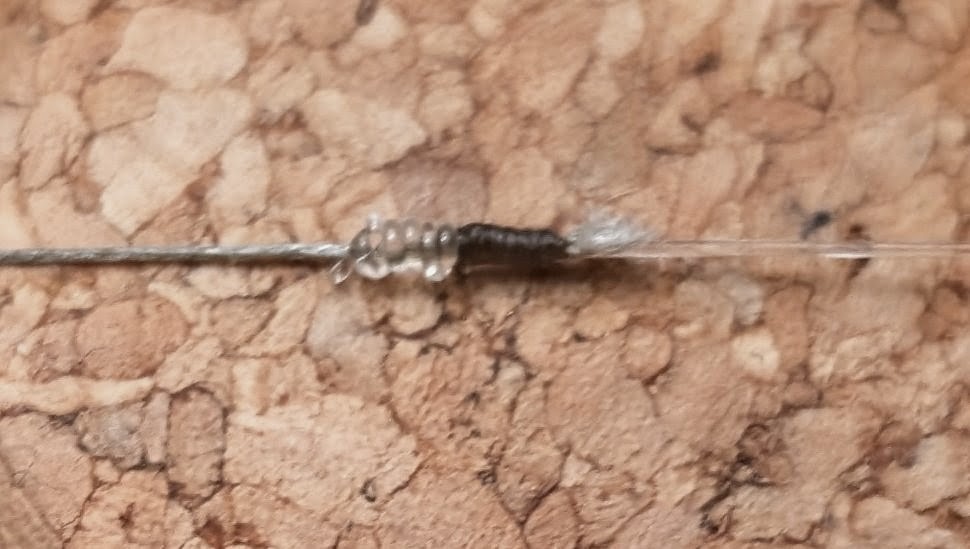
Double Uni Knot Guide: The Braid to Leader Knot I Keep Coming Back To
What Is the Double Uni Knot
The Double Uni Knot is a simple and reliable way of joining braided main line to a fluorocarbon or monofilament leader. It works by tying a Uni Knot in each line before pulling them together to create a secure connection.
It isn’t the slimmest braid to leader knot you can tie. It isn’t the strongest knot ever invented either.
Yet it’s still one of the knots I use the most.
That probably says more than any laboratory strength test ever could.
The reason is simple. It does exactly what I need it to do. It’s quick, dependable and easy enough to tie without giving it much thought.
I’ve experimented with plenty of braid to leader knots over the years. Some are undoubtedly stronger, while others cast a little better through the rod guides. But I always seem to end up back with the Double Uni because I know exactly what I’m getting every time I tie it.
Sometimes confidence catches more fish than chasing perfection.
Why I Trust the Double Uni Knot
Fishing has a habit of teaching you what actually matters.
It’s easy to spend hours reading about which knot is five percent stronger or which one creates the slimmest profile. Then you get onto the water and realise the fish couldn’t care less.
What matters is tying a knot properly.
That’s where the Double Uni has earned its place for me.
I know I can tie it in fading light. I know I can tie it with cold fingers after standing in the wind for hours. I know I can tie another one in a couple of minutes after cutting back an abrasion damaged leader.
That confidence means I’m thinking about catching fish instead of worrying about losing them.
For ultralight fishing especially, where light fluorocarbon leaders regularly need replacing after rubbing against rocks, mussels or harbour walls, that simplicity becomes a genuine advantage.
When I Choose the Double Uni
Even when I’m careful, leader material eventually gets scraped up. Sometimes I’ll run my fingers along the fluorocarbon after landing a fish and immediately feel a rough patch.
That’s enough for me.
Rather than hoping it survives another cast, I’ll cut it back and tie on a fresh section.
The Double Uni makes that process painless.
If I’m sitting at home preparing tackle for the next morning, I’ll usually tie an FG Knot because I can take my time and get everything perfect.
Out fishing, though, it’s usually the Double Uni for me.
Not because it’s better, but because it’s quicker, easier and more than good enough for what I’m asking it to do.
Why It Works So Well With Ultralight Tackle
Light braid and fluorocarbon can be surprisingly unforgiving. Small mistakes matter more because there’s less material for the knot to grip.
The Double Uni solves that by spreading the load across multiple wraps rather than relying on one tight bend in the line.
I’ve found it works particularly well with the sort of line combinations many ultralight anglers use.
Once tightened properly, it forms a compact connection that’s perfectly capable of handling the fish most ultralight anglers are targeting.
Could it be smaller? Yes. Has that ever stopped me catching fish? Not once.
How to Tie the Double Uni Knot
This is the method I use every time. The photos will do most of the teaching, so keep each step simple and don’t rush it.
Step 1
Lay your braided main line and fluorocarbon leader alongside each other. Allow around 20 cm of overlap so you have plenty of line to work with. The tag ends should point in opposite directions.
Step 2
Take the braid tag end and fold it back towards itself to create a loop around both lines. Hold the loop between your thumb and forefinger so it doesn’t move while you make the wraps.
Step 3
Wrap the braid tag end around both lines and through the loop nine times. Try to keep each wrap sitting neatly beside the last one. Neat wraps make a neater knot.
Step 4
Moisten the braid with a little water or saliva before tightening. Pull the braid tag end slowly until the wraps close together to form a Uni Knot around the leader. Don’t tighten it completely yet. Leave it sitting loose while you tie the other side.
Step 5
Now repeat the process with the fluorocarbon. Take the fluorocarbon tag end and fold it back to create another loop around both lines.
Step 6
Wrap the fluorocarbon tag end through its loop six times. Fluorocarbon is stiffer than braid, so it normally needs fewer wraps. Again, keep every turn neat.
Step 7
Wet the knot once more before tightening the fluorocarbon side. Pull steadily until the second Uni Knot forms. At this stage you’ll have two separate Uni Knots sitting a short distance apart.
Step 8
Hold the standing braid and standing leader and slowly pull them away from each other. Both Uni Knots will begin sliding together. Take your time. This is the part where the knot beds down properly.
Step 9
Keep applying steady pressure until both knots meet firmly in the middle. You’ll feel them lock together. Give the knot one final pull to fully seat everything.
Step 10
Trim both tag ends close to the knot using sharp scissors or line cutters. The finished knot should be compact, tidy and symmetrical. Before fishing, give it a firm pull to make sure everything is seated correctly. It’s far better to find a problem now than after hooking a decent fish.
A Few Things I’ve Learned
The biggest mistake isn’t choosing the wrong knot. It’s rushing.
I’ve tied messy Double Uni Knots that probably wouldn’t survive a decent fish. I’ve also tied neat ones that have landed fish far bigger than I expected.
The difference wasn’t the knot. It was taking another thirty seconds to slow down.
If the wraps cross over each other, cut the line and start again. If something doesn’t look right, trust your instincts and retie it.
Fluorocarbon is cheap. Lost fish aren’t.
Is the Double Uni Knot Strong Enough?
In my experience, yes.
I’ve never stopped using the Double Uni because it wasn’t strong enough. If I’ve lost a fish, it’s almost always been down to something else.
A leader rubbed through on rough ground. A hook pulling. Drag set too tight. Or simply making a mistake.
The knot itself has never given me a reason to stop trusting it.
That’s worth remembering because it’s easy to get caught up in online discussions about knot strength.
One knot might test slightly higher than another in controlled conditions, but fishing isn’t a laboratory.
Your knot has to be tied in the wind. On a cold harbour wall. Sometimes in the rain. Sometimes with fish feeding right in front of you.
A knot that’s theoretically stronger doesn’t help much if you struggle to tie it consistently.
For me, consistency wins.
Common Mistakes
The Double Uni is forgiving, but there are still a few mistakes worth avoiding.
Rushing the wraps
This is probably the biggest one. Crossed wraps don’t tighten evenly and they rarely look as neat as they should. If the wraps look untidy before you tighten them, they probably won’t improve afterwards. Take another minute and tie it again.
Forgetting to wet the knot
Fluorocarbon creates heat as it tightens. Without lubrication, that friction can weaken the line before you’ve even made your first cast. A quick splash of water or a little saliva takes seconds and helps the knot seat much more smoothly.
Pulling everything tight too quickly
The two Uni Knots should slide together under steady pressure. If you yank them together, they can tighten unevenly. Slow and steady almost always produces a cleaner knot.
Fishing with damaged leader
You tie a perfect knot, but ignore a leader that’s been damaged by abrasion. The knot gets blamed. The leader was actually the weak point. I regularly run my fingers along the last metre of fluorocarbon. If it feels rough, cloudy or nicked, I replace it. It’s a habit that’s saved me plenty of fish over the years.
Best Line Sizes for the Double Uni
The Double Uni works across a huge range of line strengths, but it feels particularly at home with ultralight tackle.
Most of my own setups use light braid paired with fluorocarbon leaders around 4 lb.
That combination has landed everything from tiny harbour species right through to bass that had no business eating such small lures.
The knot has never felt out of place.
As your line gets thicker, the knot becomes bulkier, but for most ultralight and light lure fishing it stays compact enough to cast comfortably.
Frequently Asked Questions
Is the Double Uni better than the FG Knot?
I don’t really think of them as better or worse. They’re different tools. If I’m sitting at home rigging several outfits before a trip, I’ll often tie an FG Knot because it creates a slimmer connection. If I’m already fishing and need a new leader, it’s usually the Double Uni. The best knot is often the one you can tie well every single time.
Can I use the Double Uni with monofilament?
Yes. Although I mostly use fluorocarbon leaders, the knot works just as well with monofilament. The tying process stays exactly the same.
How many wraps should I use?
For most ultralight setups I use nine wraps with the braid and six wraps with the fluorocarbon. There’s no need to obsess over exact numbers. Neat, even wraps matter far more.
Does the Double Uni pass through rod guides?
Yes. It’s a little bulkier than an FG Knot, but I’ve never found it to be a problem on my ultralight outfits. If you’re using very long leaders that pass through the guides on every cast, you’ll probably notice the difference. For shorter leaders, it has never really bothered me.
Is the Double Uni good for beginners?
Absolutely. In fact, I’d probably recommend it before learning more complicated braid to leader knots. It’s straightforward to tie, easy to remember and gives you confidence quickly. Once you’ve mastered it, learning other knots becomes much easier because you already understand how line behaves under tension.
Final Thoughts
The longer I fish, the less interested I become in chasing the perfect knot.
What I want is a knot that I trust.
The Double Uni has earned that trust over countless sessions.
Not because it’s the strongest. Not because it’s the smallest.
Simply because it keeps doing its job.
There’s something reassuring about tying a knot without having to think too much about it.
You finish tightening it, trim the tags, give it a pull and get back to fishing.
That’s exactly what the Double Uni gives me.
Fishing is complicated enough without making every part of your tackle more complicated than it needs to be.
Sometimes simple really is better.
And sometimes the knot you’ve tied a hundred times is worth more than the one that’s supposedly two percent stronger.