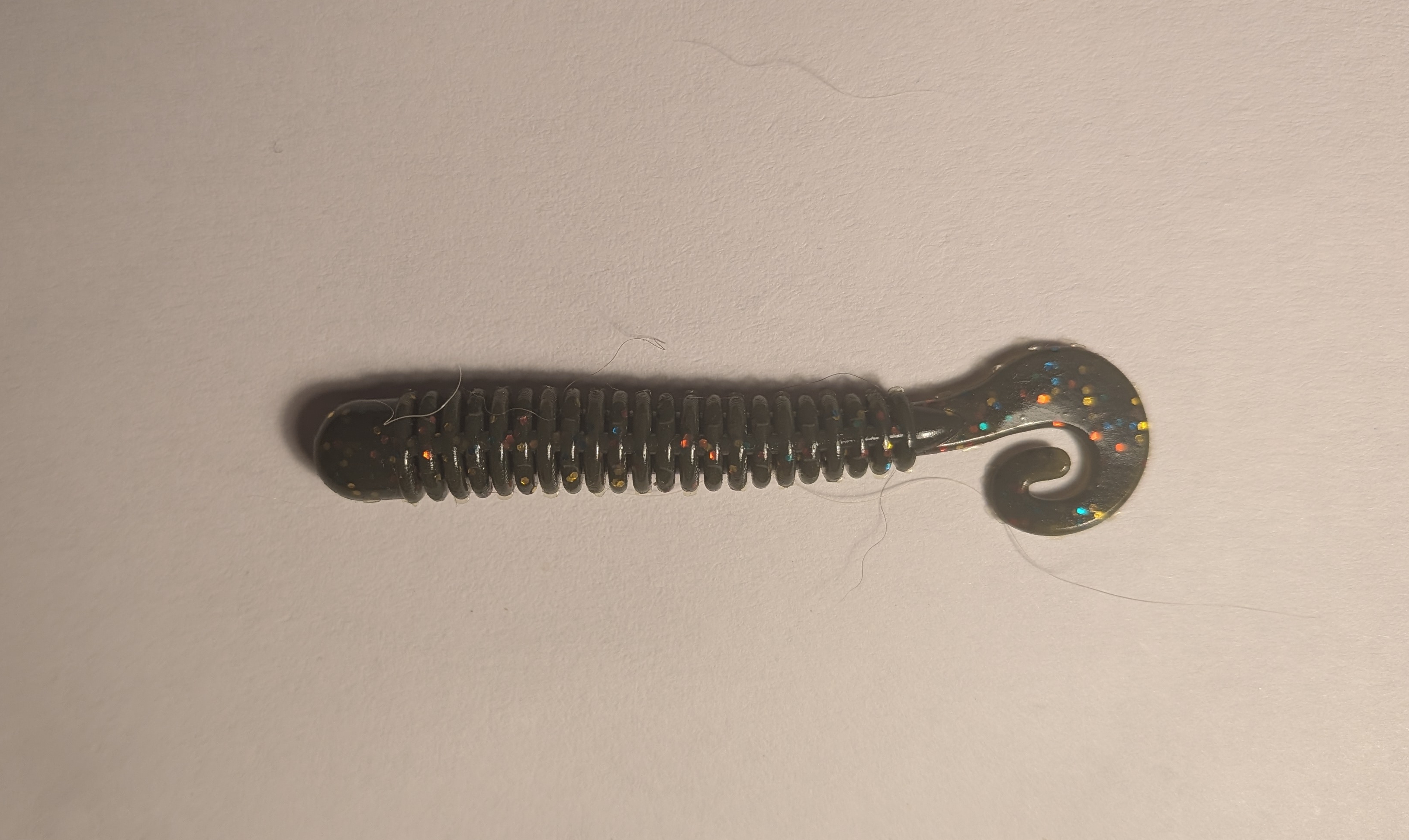
Curly Tail Lure Guide: How to Fish Them, Best Rigs & When They Work
What Are Curly Tail Lures?
Curly tail lures are one of the most effective soft plastic fishing lures for perch, bass, trout, pollock, and other predatory fish, especially in cold water, clear conditions, or heavily pressured venues where fish stop reacting to aggressive presentations.
They’ve been around for decades, but they still catch fish because they solve a problem that many modern lures don’t. Instead of relying on hard vibration or aggressive movement, curly tails create a slow, flowing action that looks natural even at very low retrieve speeds.
That matters more than most anglers realise.
When fish are active and chasing, almost anything can work. But when conditions get difficult, cold water, bright skies, heavy pressure, slow canals, inactive fish, curly tail grubs keep producing because they don’t look forced underwater.
They look vulnerable.
What Is a Curly Tail Lure?
A curly tail lure (often called a curly tail grub) is a soft plastic lure with a long curved tail designed to create continuous movement underwater.
Unlike paddle tail lures that create strong vibration through a kicking tail, curly tails work through drag and flow. The tail folds, rolls, and naturally dances as the lure moves through the water or sinks toward the bottom.
One of the biggest advantages of curly tails is that they work at extremely slow speeds. Even minimal movement from the angler is enough to keep the tail alive.
That’s why they’re so effective for finesse fishing and ultralight fishing.
What a Curly Tail Lure Actually Does Underwater
A curly tail grub works through flow, not force. That tail doesn’t punch water like a paddle tail it drags through it, constantly curling, folding, and opening as the lure moves forward or sinks. Even at very low speeds, the tail stays alive, which means you don’t need aggression in your retrieve to get a response.
This is where they separate themselves from most other soft plastics. A paddle tail is built around vibration and search power, but a curly tail is built around natural behaviour. It doesn’t shout to fish, it just exists in a way that looks easy, vulnerable, and worth a second look.
That’s why curly tail lures have stayed relevant for decades. They don’t rely on perfect conditions or complicated retrieves, they just create believable movement underwater.
Why Fish Love Curly Tail Grubs
Fish don’t always want something that looks like it’s escaping. A lot of the time they want something that looks easy, struggling, or simply not aware of what’s going on around it. That’s exactly the window curly tails sit in.
The key is how unforced the movement is. There’s no urgency in the action. The tail just flows.
Fish don’t smash it because it’s fast. They hit it because it looks like an easy opportunity that won’t cost them energy.
This is why anglers who slow down often rediscover curly tail grubs. In many ways, they punish impatience but reward control.
How to Fish Curly Tail Lures Properly
The biggest mistake with curly tail grubs is treating them like a search bait. They’re not. If you burn them back in like a paddle tail, you strip away the exact movement that makes them effective.
The most consistent approach is a slow, steady retrieve, just enough to keep the tail working without tightening its natural curl. That’s where the lure looks most believable. From there, everything else is about variation, not speed. Small pauses, slight lifts, letting it sink through the water column, those changes are often what trigger the bite.
One of the most effective moments is during the drop. As the lure falls, the tail continues to flutter and spiral, creating a completely different shape and rhythm in the water. This is often where fish commit, especially when they’ve been following but not reacting.
Bottom contact also changes everything. Once it hits the seabed, lakebed, or riverbed, the lure stops being a swimmer and becomes something alive but grounded. It drags, it rolls, it hesitates and that behaviour is incredibly difficult for fish to ignore.
Best Retrieves for Curly Tail Lures
A slow steady retrieve is the baseline and usually the best starting point. It gives the tail enough movement to work naturally while keeping the presentation subtle and controlled.
A lift-and-drop retrieve changes the lure completely. Instead of swimming constantly, the lure rises, falls, and flutters back toward the bottom. This often triggers bites from fish that are following but undecided.
Dragging the lure slowly along the bottom can also be extremely effective. The lure stops looking like a baitfish and starts behaving more like a feeding or injured creature moving across the bottom.
The biggest thing with curly tails is resisting the urge to overwork them. They already have movement built into the design. Most of the time, less input from the angler actually creates a more natural presentation.
When to Use Curly Tail Lures
Curly tails are at their absolute best when fish aren’t in chase mode. That’s the simple way to think about it. If fish are actively hunting and smashing bait, you usually don’t need this kind of finesse. But when things slow down, curly tails often start to outperform expectations.
They are especially effective in canals, slow rivers, and stillwaters where fish sit tight to structure and don’t want to move far for food. They excel in winter fishing because they don’t demand aggression or energy from the fish, they simply pass through the zone at a natural pace.
That’s the key. They don’t force attention. They invite it.
When Curly Tail Lures Don’t Work
Curly tails do have limits, and it’s mostly about energy mismatch. If fish are actively chasing baitfish, smashing fry, or reacting to fast-moving targets, a curly tail can feel too slow or too subtle. In those situations, fish often ignore them not because they’re bad, but because they don’t match the feeding tempo in the water.
Heavy colour or dirty water can also reduce their effectiveness if there’s no added vibration in the system. They don’t push water aggressively, so in some situations they simply don’t get enough attention unless fish are already close.
That’s not a failure, it’s just a mismatch of tools to conditions.
What Fish Do Curly Tail Lures Catch?
Curly tail lures catch almost every predatory fish species that feeds on small baitfish, fry, insects, or bottom-dwelling prey.
They are especially effective for:
Perch
Bass
Pollock
Trout
Zander
Pike
Crappie
Panfish
Because they can be fished slowly and naturally, curly tails are often effective when fish are feeding cautiously.
Smaller curly tail grubs are particularly popular in ultralight fishing because they suit lighter tackle, finesse presentations, and subtle retrieves.
Curly Tail vs Paddle Tail
A paddle tail is about finding fish. It creates vibration, covers water quickly, and gets reaction bites. A curly tail is about convincing fish. It slows everything down, stays in the strike zone longer, and turns interest into commitment.
One is noise. The other is behaviour.
If you understand that difference, you stop switching between them randomly and start using them for what they actually do.
Best Rigs for Curly Tail Lures
A jig head is the most common and reliable option. It keeps the lure balanced, lets the tail work cleanly, and is ideal for slow swimming retrieves or lift-and-drop techniques.
A cheb rig gives the lure more freedom and movement. Because the weight is separated slightly from the hook, the lure swings and reacts more naturally on the fall, which can make a difference when fish are hesitant.
A dropshot rig changes the lure completely. Instead of moving through the water, the curly tail stays suspended in place, gently pulsing in the current or with tiny rod movements. This is one of the best ways to fish curly tails when fish are inactive and holding tight to structure.
Choosing the Right Curly Tail Size
Smaller curly tails create a softer, more finesse-style presentation. They work well in clear water, during tough conditions, or when fish are feeding on small fry and tiny prey items.
Larger curly tails push more water and create a bigger visual target, but they still maintain that flowing action that makes the lure effective in the first place. Bigger sizes are often better in deeper water, windier conditions, or whenever you need fish to notice the lure from further away.
Size isn’t really about targeting bigger fish. It’s about matching the signal you want the lure to create underwater.
Best Colours for Curly Tail Lures
Natural colours like green pumpkin, smoke, watermelon, and motor oil are usually the safest all-round choices because they look believable in clear or lightly coloured water.
Darker colours such as black or dark brown create a stronger silhouette and work well in low light or stained conditions.
Brighter colours like chartreuse can work when visibility is poor or when fish are feeding aggressively, but in many situations, action matters far more than colour choice.
A perfectly worked curly tail in the wrong colour will often outfish a badly presented lure in the “perfect” colour.
Common Mistakes With Curly Tail Grubs
The biggest mistake anglers make is fishing them too fast. Curly tails are designed to work at low speed, and rushing the retrieve removes the natural movement that makes them effective.
Another mistake is constantly twitching or overworking the lure. Unlike some soft plastics, curly tails already produce plenty of movement on their own. Too much rod action can actually make them look less natural.
Many anglers also ignore the fall completely, even though this is where a huge percentage of hits happen. The drop phase is often the moment where the lure looks most vulnerable.
And finally, a lot of people give up on them too quickly because they don’t create violent reaction bites. Curly tails are subtle confidence lures. They often work quietly until suddenly the rod loads up.
Final Thought
Curly tail lures don’t win because they’re aggressive. They win because they stay believable when everything else starts looking too fast, too sharp, or too artificial.
They sit in that strange middle ground between movement and stillness, where fish don’t feel pressured but still can’t completely ignore what they’re seeing.
That’s why they’ve survived decades of lure trends without disappearing.
Not because they’re exciting.
Because they still catch fish when other things stop working.