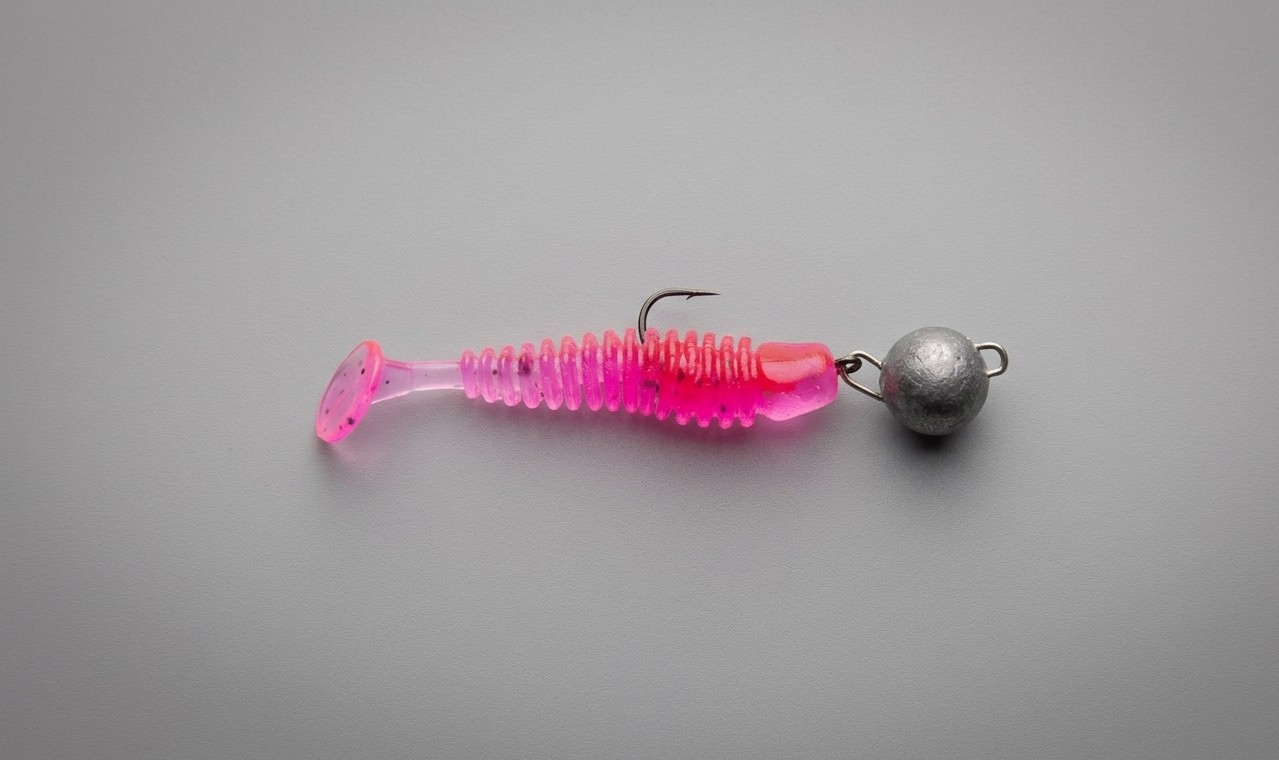
Ultimate Cheb Rig Guide: How to Fish the Cheburashka Rig”
What Is a Cheburashka Weight (Cheb Rig)?
A simple guide to the Cheb rig, how it works, when to use it, and why it’s one of the best ultralight finesse setups for lure control and natural presentation.
The Cheb rig (Cheburashka rig) is a modular weight system used in finesse, ultralight and lure fishing where the hook is attached via a clip instead of being fixed to a jig head. It looks almost too simple to matter.
A small weight, a clip, and a hook. Nothing fancy. But once you actually start using it properly, it becomes obvious why it’s been adopted so widely in light lure and finesse fishing.
It’s not just a variation on a Jig Head, it’s a different way of thinking about presentation.
Why the Cheb Rig Works
Most traditional jig heads create a fixed, predictable movement. The lure follows the weight. It sinks and moves as one unit.
The Cheb rig breaks that connection.
Because the hook can pivot and move independently, the lure gains a more natural fall and a slightly “separated” action on the drop. That separation is subtle, but it matters, especially in clear water or pressured areas where fish see a lot of standard jig head presentations.
It doesn’t make the lure look dramatically different. It just makes it look far less mechanical.
And that’s often enough to make a difference.
Presentation and Behaviour Underwater
A 3g Cheburashka weight
One of the biggest advantages of the Cheb system is how it changes the sink profile.
Instead of a straight, fixed descent like a jig head, you get a staggered fall, the weight drops first, and the lure follows with a short delay. That creates a natural flutter or drift effect that can resemble injured or disoriented prey.
I often find fish will hit it straight away on the drop, before the retrieve even starts.
A very effective way to use this is the lift and pause technique:
Let the lure hit the bottom, wind in the slack, lift the rod, follow it back down while winding slack, then repeat. This lifts the lure slightly off the bottom and lets it fall again in a controlled way, mimicking a struggling baitfish.
In moving water, the effect becomes even more noticeable. The lure and weight can momentarily separate, reconnect, then drift apart again.
On the retrieve, the movement stays subtle but naturally more expressive. The lure is never fully locked into the weight’s motion, so it retains independence especially during pauses.
And pauses matter more than anything else here.
Weight Choice and Scaling the Rig
The Cheb system is best understood as a scaling tool rather than a fixed setup.
Light weights (0.5g–2g) are ideal for shallow water, slow presentations, and calm conditions. This is where the rig feels most natural and subtle.
Medium weights (3g–5g) give more control in current, depth, or wind while still keeping enough freedom in the system to maintain that separation effect.
I’ll often scale up to 5g when conditions (especially wind) make lighter weights difficult to fish effectively. It helps with casting distance, accuracy, and sink speed in rougher water.
Heavier weights still work, but the system starts to lose some of its finesse (the real advantage sits in the lighter range).
That said, the Cheb rig shouldn’t be ignored in heavier fishing either as it still offers unique advantages over traditional jig heads, including its flexibility.
Hooks and Rig Flexibility
This is where the Cheb rig stands out.
Because the weight and hook are independent, you can change presentation instantly just by swapping hook size or style without changing the weight.
Small hooks, larger hooks, from traditional to weedless on the same weight. No problem, the Cheb has you covered.
Multiple hook sizes and patterns on the same Cheb weight
That’s one of the real benefits of the system: you pick your weight for conditions, then fine-tune hook choice to match what’s in front of you.
This flexibility is the real advantage as you’re not locked into one presentation style like you are with a fixed jig head.
Where the Cheb Rig Comes Into Its Own
The Cheb rig really shines when conditions aren’t straightforward.
When fish are active and feeding hard, almost anything works. But when things slow down clear water, pressure, cold conditions, or heavily fished marks, presentation and small details become everything.
This is where the Cheb system excels:
slow, natural sink rates
subtle movement in still or slow water
more expressive, slightly unpredictable lure movement
quick adjustment without re-rigging
It also allows you to fine-tune presentation on the fly, changing hooks or styles without rebuilding your setup.
How to Set Up a Cheb Rig
How to rig a cheburashka
Setting up a Cheb rig is simple:
Remove the wire clip from the Cheburashka weight
Thread the clip through the eye of your hook
Reinsert the clip into the weight
Tie your line to the weight
That’s it, you now have a fully modular setup where the hook can move freely.
Cheb Rig vs Jig Head (Real-World Difference)
The simplest way to think about it:
A jig head is direct, efficient, and consistent. It gives immediate contact and predictable movement.
A Cheb rig introduces separation, delay, and slight unpredictability. It’s less rigid, and that lack of rigidity is what triggers fish that are tracking but not committing.
It sits alongside the Split Shot Rig as a more finesse-driven alternative.
The Texas Rig sits in a different space again, more structured, weedless, and designed for fishing through cover where both Cheb and jig heads struggle.
For even slower, more controlled presentations, the Dropshot Rig sits at the far end of the system, holding a lure in a fixed position rather than working it through movement.
FAQs
What is a Cheb rig?
A Cheb rig is a setup where the weight and hook aren’t fixed together, allowing the lure to move more naturally in the water.
How does a Cheb rig work?
It uses a clip system to separate the hook from the weight, creating a more natural fall and movement compared to a jig head.
When should I use a Cheb rig instead of a jig head?
Use a Cheb rig when fish are pressured, conditions are calm or clear, or when a slower, more natural presentation is needed.
Final Thoughts
The Cheb rig isn’t complicated, but it changes how you think about lure fishing.
Instead of treating the lure and weight as a single fixed unit, you start thinking about how each part behaves independently in the water.
That shift is the real value.
It won’t replace jig heads. It doesn’t need to.
But it adds another layer of control and in finesse fishing, that control is often what makes the difference between follows and takes.